For Infernal Use Only
- Genre: RPG/Mystery/Thriller
- Theme: Interactive Fiction
- Engine: N/A
- Tools: Arcweave, Photoshop
- Duration: 30 hours
- Role: Narrative Design, Worldbuilding, Dialogue
Game Jam submission (ArcWeave x IGDA Game Writing SIG).
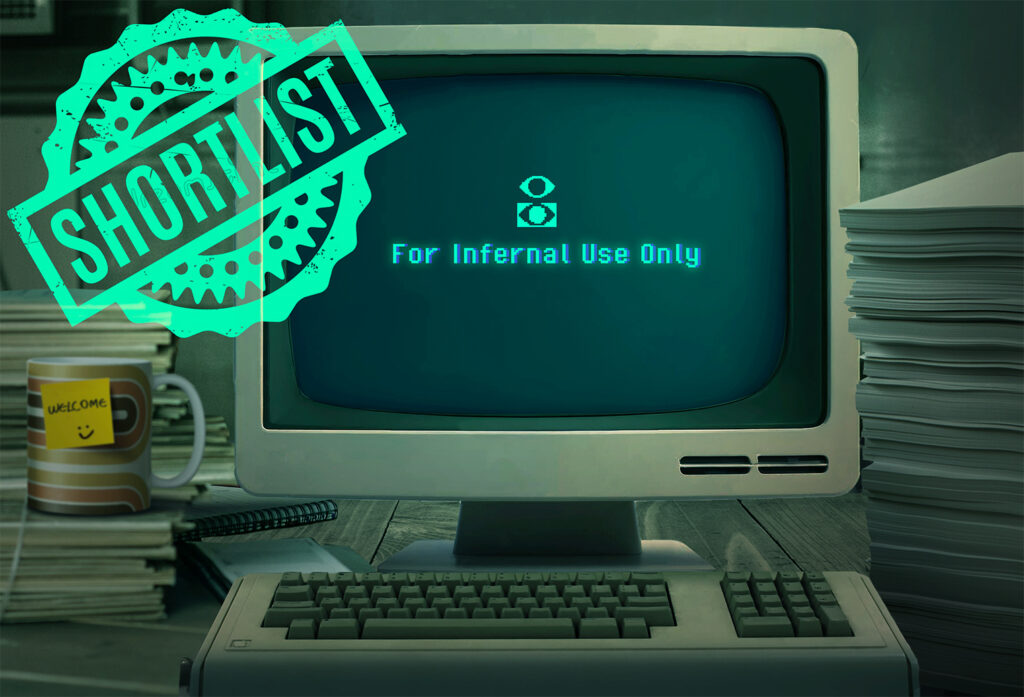
| Jam Result: Shortlisted
World Lore
You wake up in a 1970s-style office, starting your first day at a mysterious HR department. At first, everything looks normal but you’ll soon realize nothing it is what it seems…
Overview
The Game Writing SIG Arcjam (hosted by Hosted by Arcweave, IGDA Game Writing SIG was a 72-hour online game design event dedicated to story-driven games and the craft of interactive writing. The theme was ‘Resilience’, and since I decided to join a day later, I had relatively short time to think about a concept and write it.
Although I’m working now on an update for project, I would like to share my thoughts on the creative process, the sources of my inspiration, and the time management methods that helped me complete the project on time, along with some narrative documents I created.
The Theme
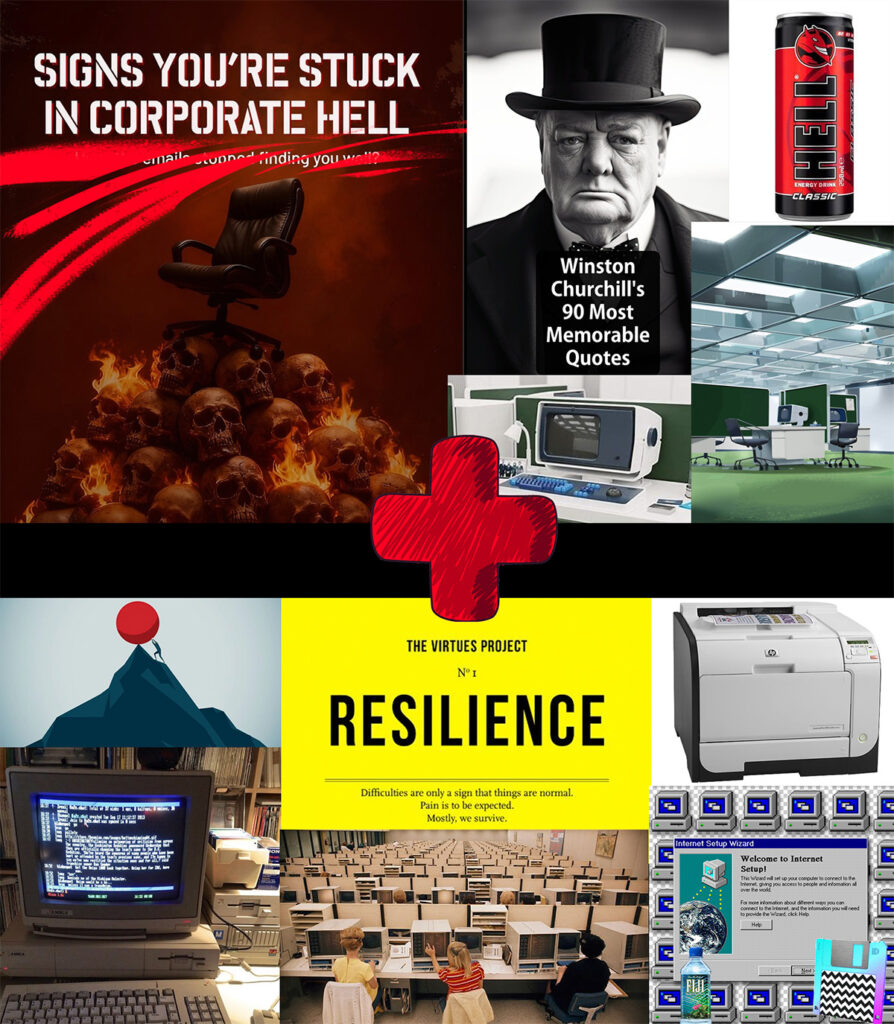
A little moodboard to illustrate the train of thoughts
When we hear the word ‘resilience’, we immediately think of survival stories, emotional endurance, or heroes overcoming obstacles. Since I’m drawn more to cynical, dark and twisted stories, I decided to go on another path.
It all started with the question of what “resilience” means to me, or rather, what puts it to the test… Not physical challenges, but bureaucratic processes (and sometimes technical obstacles) are what really test my patience. Endless and unnecessary paperwork, stress at work (especially on the first day), navigating impossible rules, coping with operating systems designed to break you; and yet, you don’t give up even after the 1,000,000th error message, just keep working on the tasks and keep pressing that button.
Based on this, I reframed the theme into something that resonated with me: place the player inside an environment that tests them… And what environment tests endurance and patience more than anything?
For me, it is the corporate bureaucracy, HR mazes and endless forms.
…That’s how it started.
Designing The Hook
The hook (or First-Time User Experience aka FTUE) is crucial when a new game is being introduced to players. Based on the first 30-60 second, they start forming an opinion about it. That’s the time window when the player sits down, hits “Start” and decides whether this game has legs to stand on, or not.
It was the first thing I wrote, right after I decided about the theme and setting of the story. Ideally, I like to write it on day one, so then I immediately see if the core loop is fun. Because if the first 30-60 seconds intro is boring, the rest of the game will be too.
Designing the hook is one of my favorite parts of writing. It’s the opportunity to instantly drag the player/reader into your world, but instead of answering all their questions, you make them asking more. It’s about creating a question the player wants to answer, while also sets the emotional temperature and the Player is instantly introduced to the core situation they will need to deal with.
For my story, the hook was simple and instantly gives away a clue about mood and atmosphere:
“You wake up at a desk in a 1970s-style office, with no memory of how you got there. Your desk is covered in piles of paper and the only light comes from the flickering ceiling lights and your monitor.”
Too much clarity kills curiosity. Too little clarity kills engagement.
I wanted to give the player just enough information to feel grounded, but leaving a blank space to trigger their curiosity to keep going.
Time Management Methods For Jam
Time management is a skill on its own! Especially when you have a very little time to deliver your work – in my case a short game, within 30 hours, sleeping included -, you must break down the tasks into 3 layers and work from top to down:
- The Core:
These are the elements that absolutely must be included for the game to be playable. It must include a storyline with an inciting incident, a crisis point and a point of no return, as well as a solution or, in some cases, a devolution. - Nice To Have:
Optional characters, different endings, quests, more worldbuilding, more details, more juice. - Aesthetics:
Menus, Intro text, game UI, everything that is visually engaging, but not urgent at the moment when the deadline is looming above your head like a little dark cloud.
I also split my day into 3 slots: Writing, Making Art, Fixing grammars & editing.
Switching between tasks gives your brain enough space to rest and be able to recharge with creative energies. That means that even if you feel like you are currently resting, you are still making progress. These methods, of course, only apply to solo developers like me who did the writing, editing, art, coding, publishing on their own, alone.
My Jam Project: 'For Infernal Use Only'
Narrative Design Focus
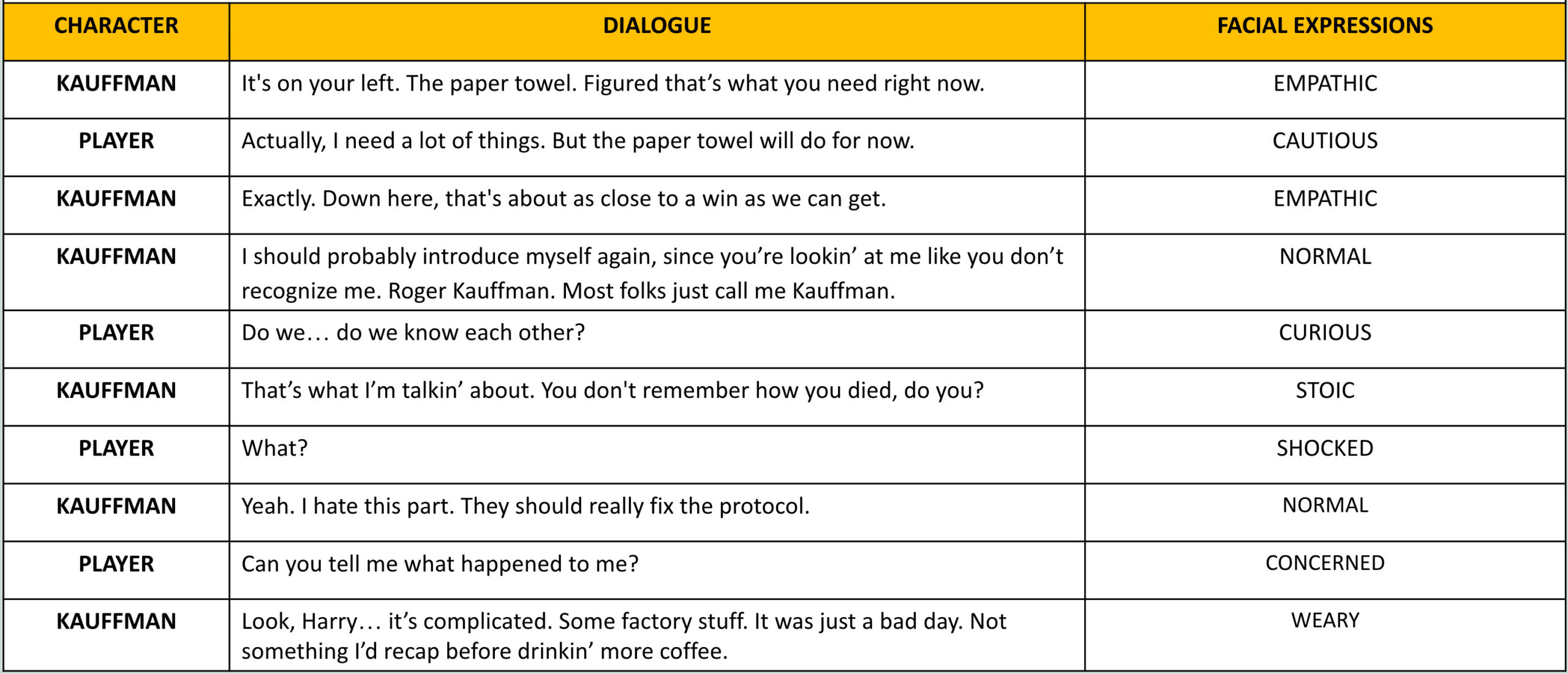
I designed dialogues to deliberately withhold information in the beginning, allowing humor, deflection, and tonal dissonance to foreshadow future revelations while maintaining player agency.
NPC Character Designs
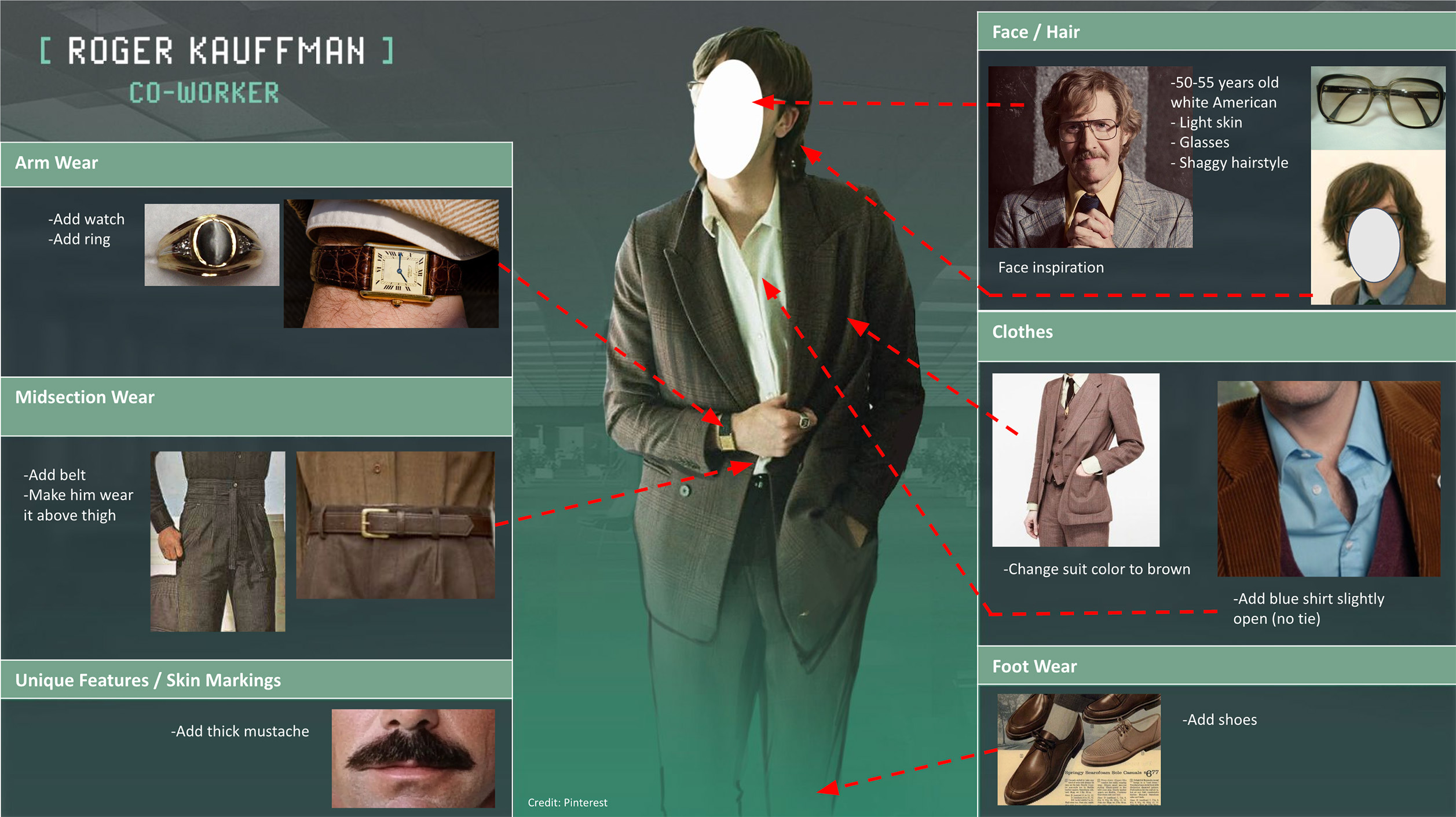
Roger Kauffman is the co-worker whom the Player meets first, providing some initial clues to their questions – without clearly and explicitly answering them.
My focus was to shape a character that the Player can instantly recognize: a hard-working handyman, who seems to appear helpful and friendly, yet there is something in him that raises the Player’s suspicion about his role in the story.
In gameplay, Roger functions as an early guide: an insider who knows the unspoken rules, that the Player shouldn’t cross. He sets the tone for the moral questions ahead.
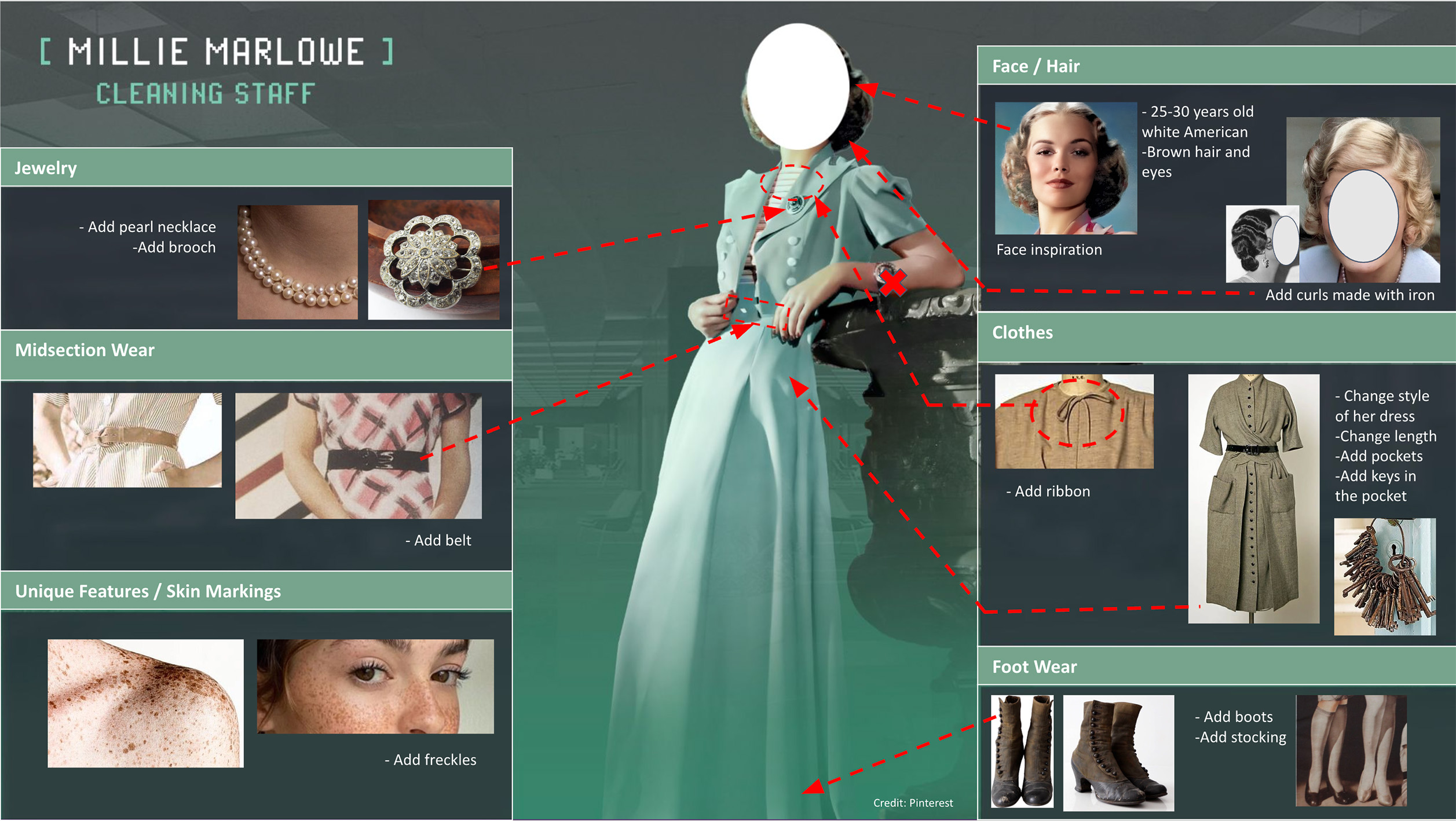
Millie Marlowe is a supporting NPC in the story, working as cleaning staff and source of information, helping for the Player to fill up the gaps regarding their memory loss. To design Millie, I focused on creating a character who slightly feels out-of-world and creates more questions than answers: a young, stylish woman who clearly hides more backstory that instantly gets the Player’s curiosity.
In gameplay, she provides the Player with a clear objective and help for their mission, guiding them toward it.
[Note: This character only appears in the planned update.]
Building Design
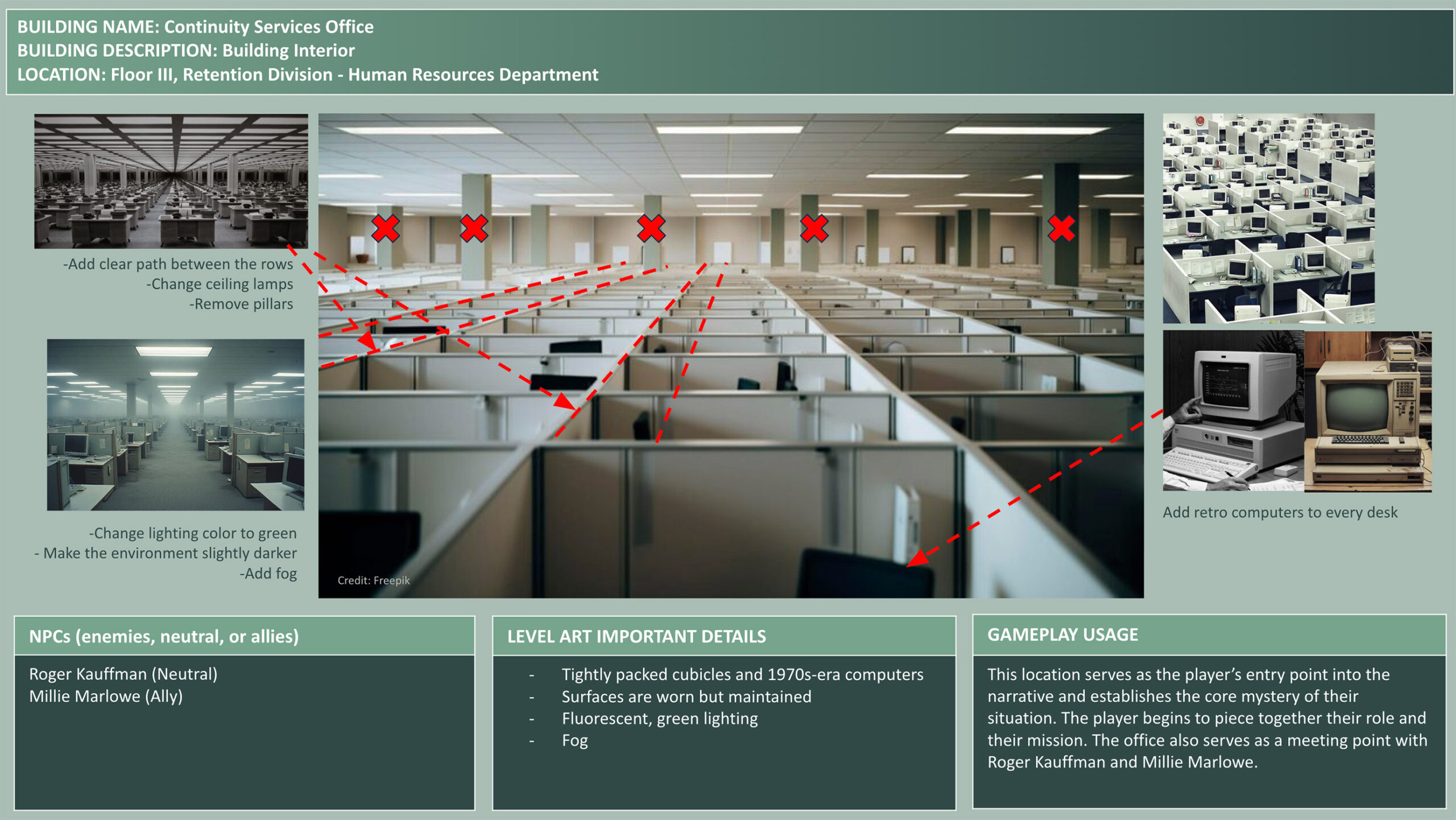
I designed the HR office as a functional workspace that clearly displays mundane bureaucracy but also hinting the true nature of the environment. The cubicle layout, desk placement, and retro computers were arranged to guide the Player movement, support NPC interactions, and create clear lines of sight for storytelling beats.
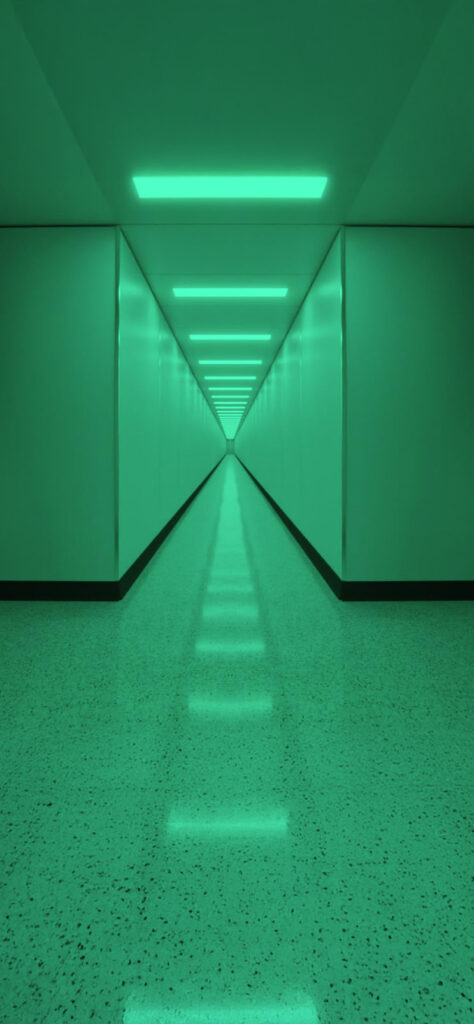
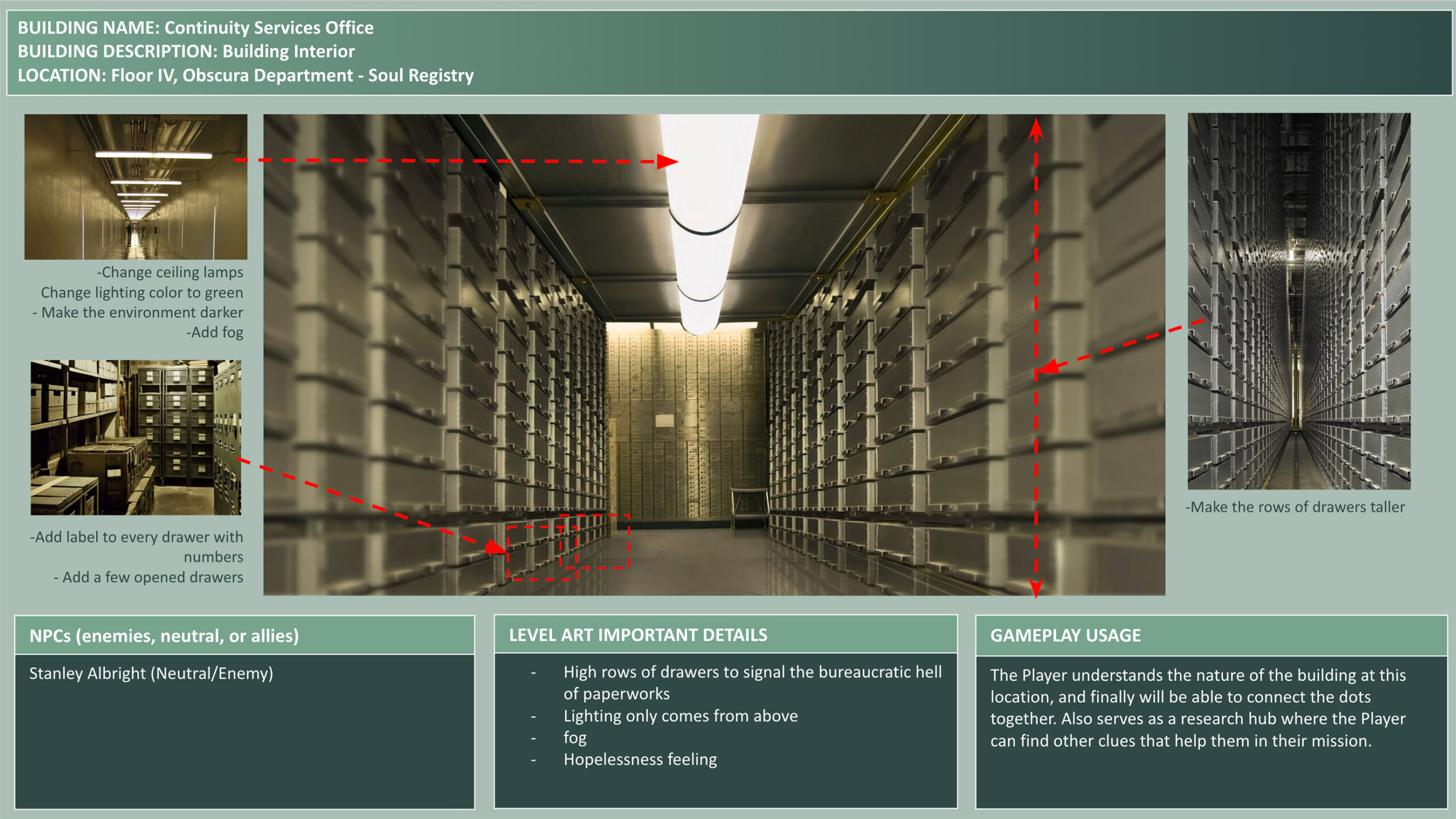
To design the Obscura Department that will appear in Chapter 2, I had three things in mind: a place that feels and signals hopelessness, bureaucratic hell and due to its weak lighting also should increase tension as one of the twist point happens here.
[Note: This location only appears in the planned update.]
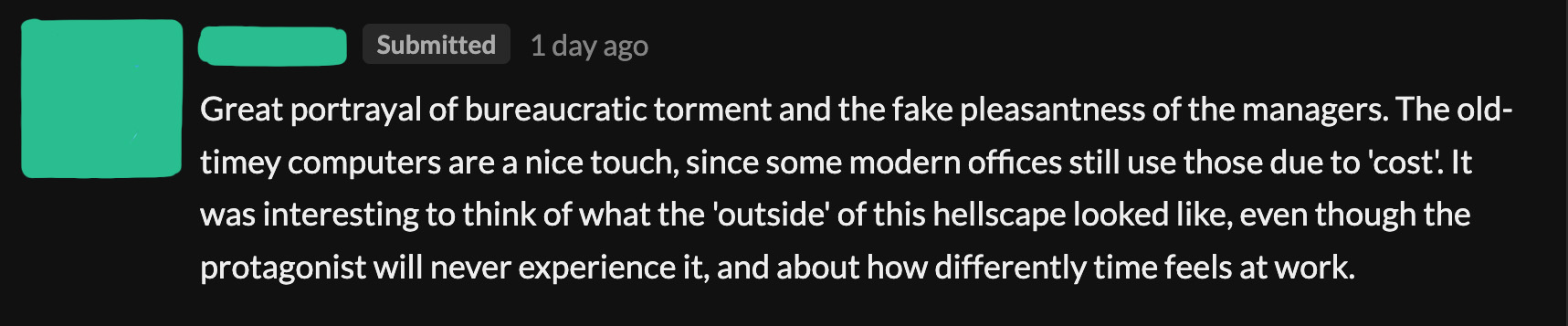
Feedbacks From Community
Genre and Content Research
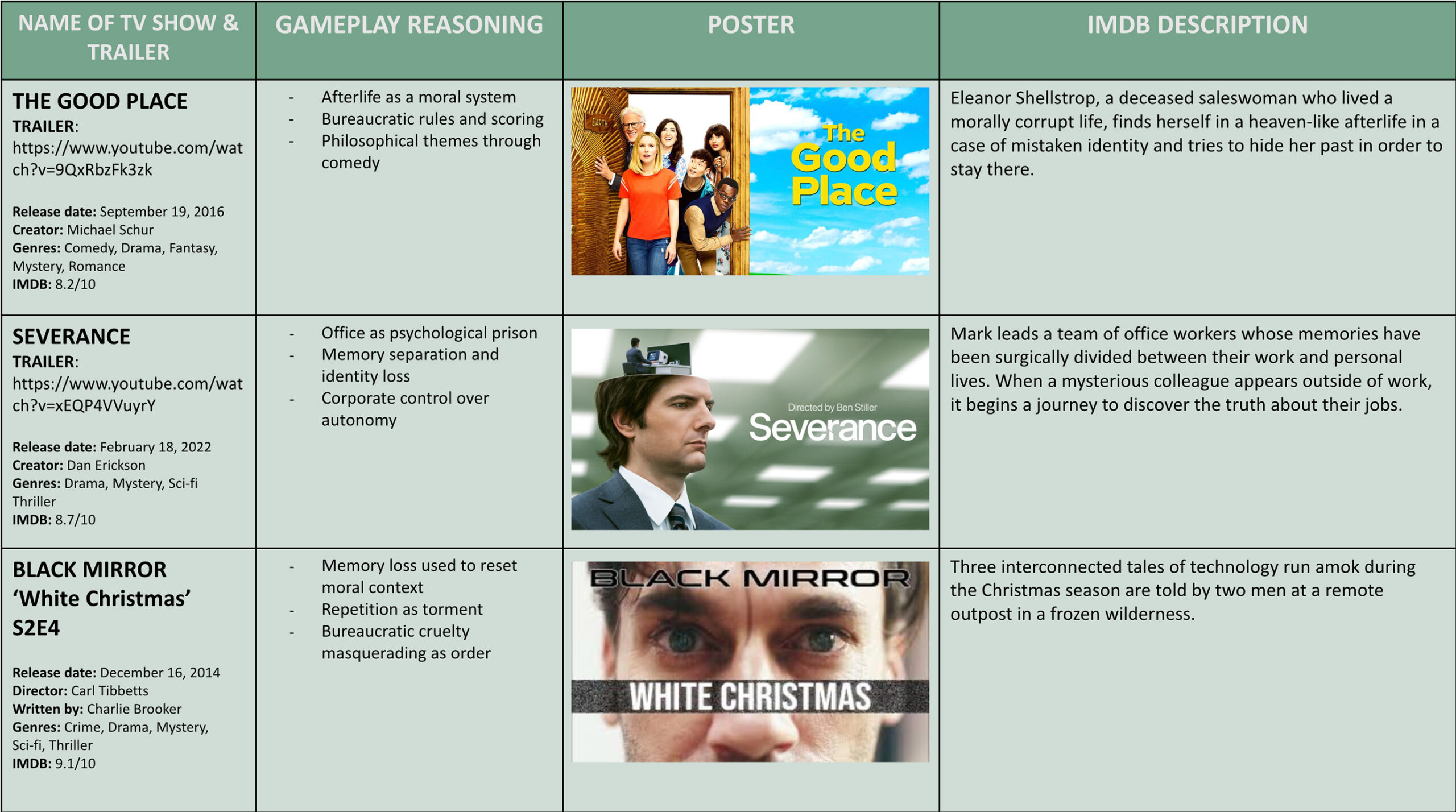
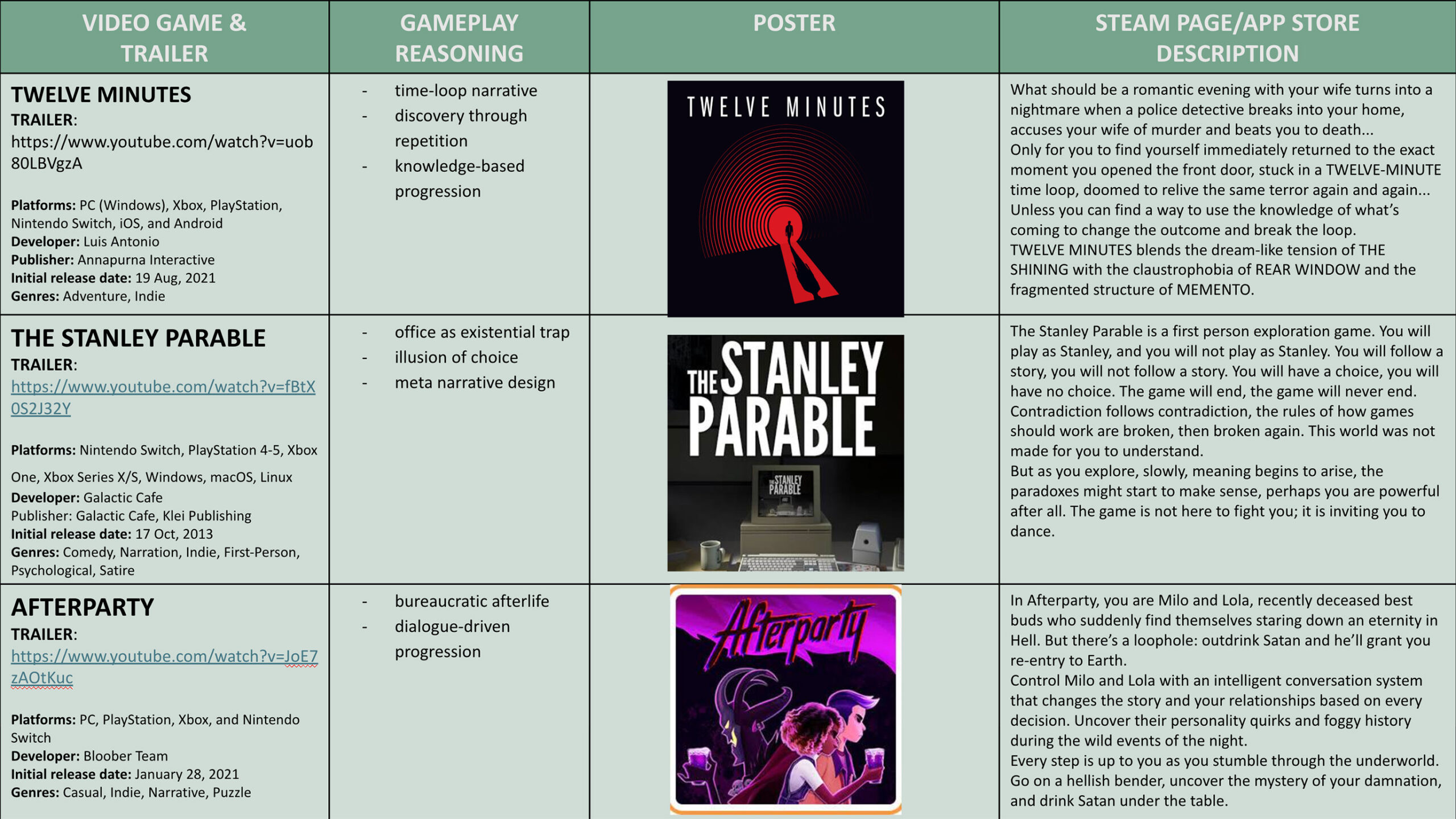
When started writing ‘For Infernal Use Only’, I had a story outline in my mind that could be described as The Good Place in Black Mirror style with Severance’s dark dystopia – a bit of surreal setting with dark humor and twists. I researched similar games for a clearer view what kind of audience would be interested in my short story and to see what other games and stories deal with the concept I had in mind.